
|
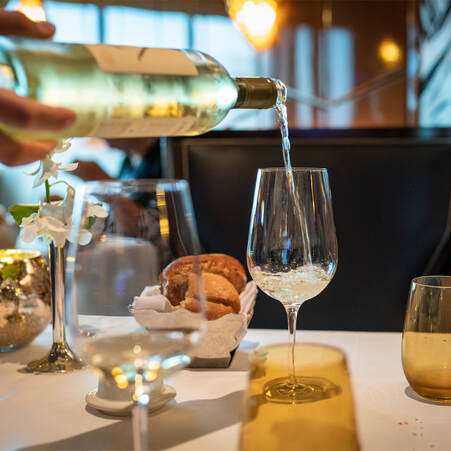
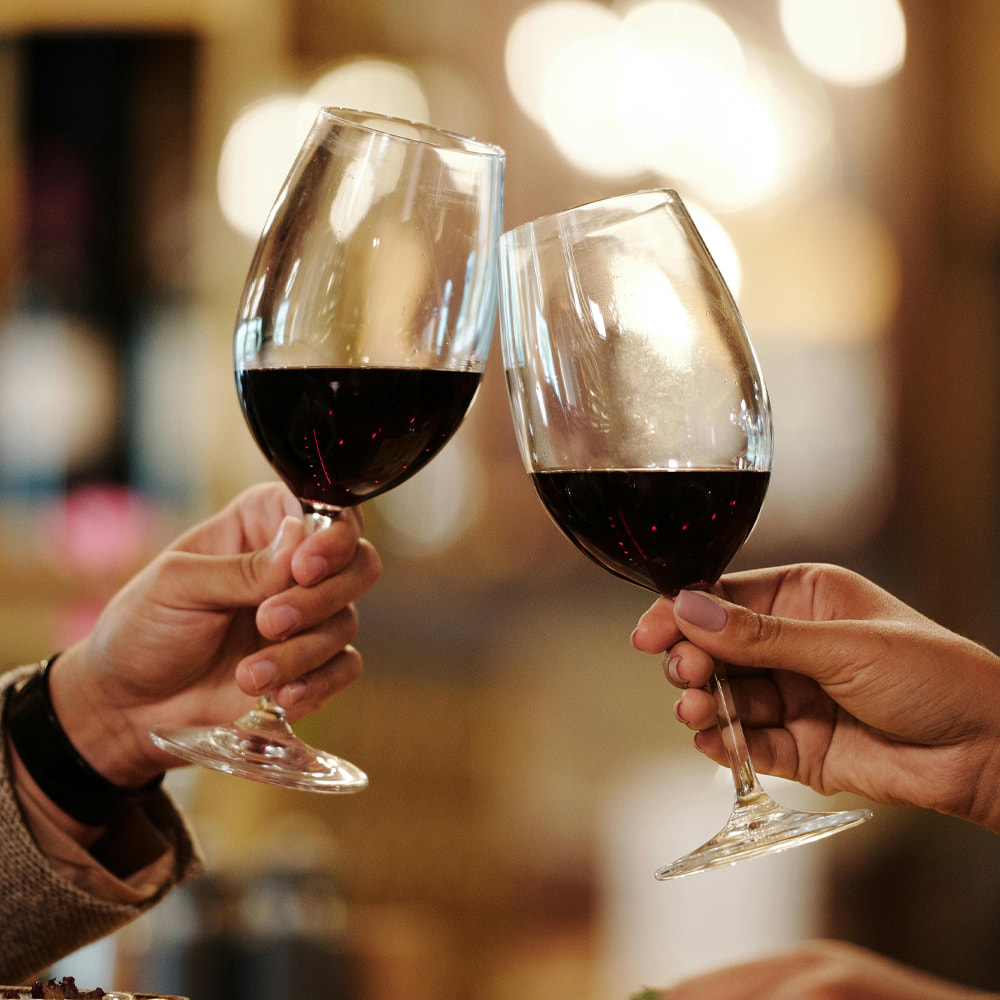
Always expect great taste & great wine
Lotus Wine & Spirits takes pride in the quality of the wine and spirits that we offer for wholesale. |
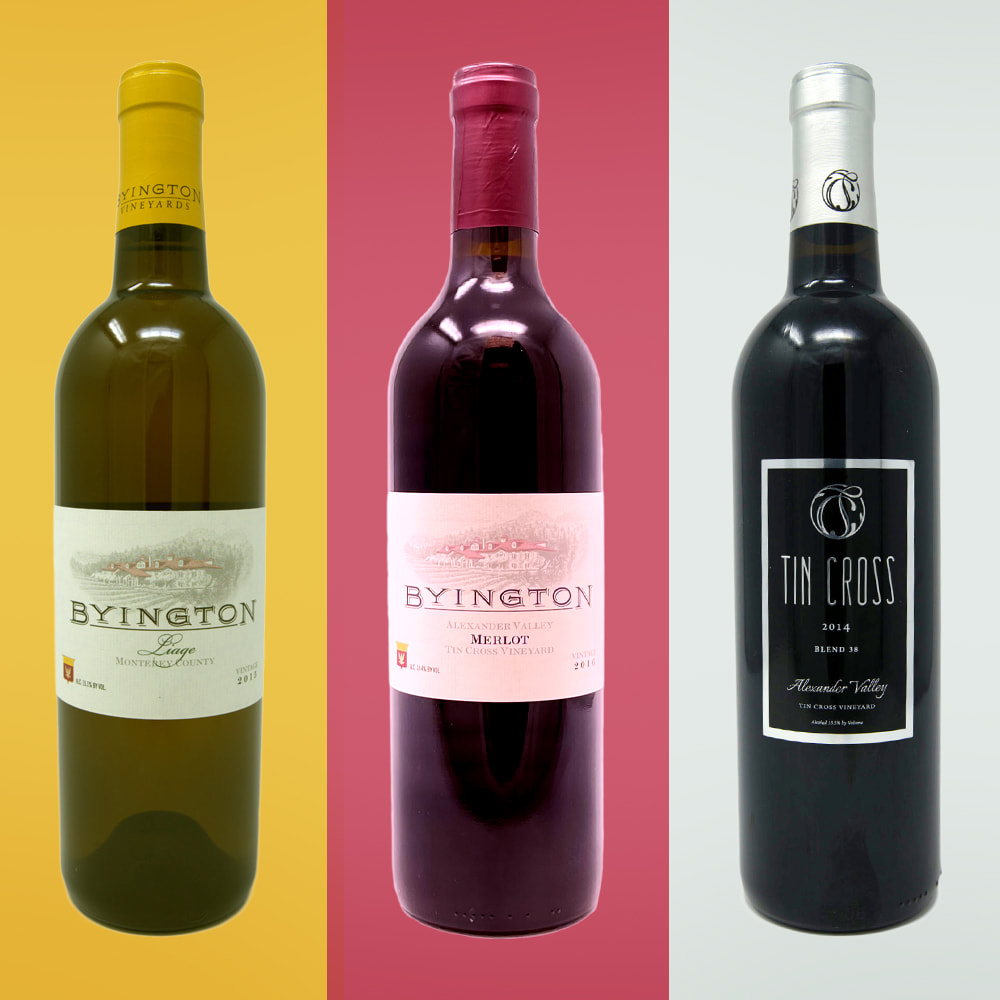
Byington Vineyard
|
Joseph Jewell WinesProducing wines that bring people together. We create wines that combine character and approachability, community and drinkability. Delight in the simplicity of well-made wines, created and shared in kindred spirit with you.
|
|
Our first vintage was 90 cases of Chardonnay in neutral oak barrels. We named the wine Heroine to capture its grace and elegance, while still reflecting the powerful terroir of California, and we loved the idea of putting a true American art form – comic book art – on the label of our American wine. When it all sold in 6 weeks, we realized we might have more than just a side project on our hands—this brand was becoming a real business.
|
Rockwell Vermouth Co.Rockwell Vermouth offers a fresh American take on a classic European spirit. Handcrafted in California, each small-batch production of Rockwell Vermouth is a testament to what's possible when passionate artisans from around the country work together toward a shared vision.
|
Wandering BarmanQuality. Precision. Craft. We believe that batching is the future of bar and service management. Never wait for a cocktail again. We combine our own bitters, syrups, and infusions with quality spirits to create original cocktails — it takes experience and expertise to do it well.
|
|
Sip Spiritually. Catedral Mezcal brings farm to bottle in a revolutionary way by offering 6 varieties of mezcal, from 6 different mezcaleros, which has never been done before. We are committed to sustainability and local partnerships as a fundamental pillar of our business model.
|
|
Inspired by the greatest wines in the world along with the design, branding and quality of luxury goods, Lawrence Fairchild combines extreme, never-before-seen detail and modern-art influences to create the most-collectable wine bottles in the world: Stones Wine and Perrarus.
|
|
The origins of Envy Wines began in the mid 1980’s when the historic Carter House Victorian was built. When this small bed and breakfast became too popular for the crowd from the cities up and down the west coast the Hotel Carter was added and a restaurant (the highly regarded Restaurant 301) was needed for the guests.
|
|
Aurélien took the helm at Suenen in 2009 and has since refocused and adjusted the family holdings as well as the bottlings put out by the Suenen label. He currently is only bottling Blanc des Blancs Champagne however he still retains about 2 hectares of Pinot Noir and Meunier most of which he sells to other producers.
|
|
Although he has roots in the winegrowing world, Etienne decided to create his own estate in 2010 by renting vineyards from his grandparents. He settled in Avize, and from there, a blank page began to be written.
The vineyard plantings are primarily focused on Chardonnay, but he also took the bold step of replanting heirloom grape varieties in certain plots. |
|
What we strive to do at Coessens is to create wines that reveal all the richness of a rare and outstanding terroir. A terroir that, combined with the patience and rigor of the wine maker, produces complex wines with strong personality, with a pronounced fruity and mineral character, yet which never betray their origins.
|
|
Our daily work is based on a wine-growing philosophy marked by traditions and a deep respect for our living heritage and for our land and what it offers us. We have therefore decided to give priority to natural and dynamic work methods
|
|
Discover our ecological approach to wine production, where respect for life and energies are the key words. Gentle methods such as gravity, aging on lees and naturopathy are used to create unique, top quality wines.
|
Champagne Stéphane RegnaultThe Chromatique vintage is a blend of the different plots of the farm. We therefore find in the Mesnil sur Oger vines, mainly on the lower very chalky hillsides, and the Oger vines with a richer soil.
|
|
The footprint of the sun, the rain and the wind. Inspired by the magic of the bubbles, the men and woman of Champagne have given themselves the task to carve out the terroir so it can express all of its typicity.
|
|
Pierre Gerbais is a family-run domaine in Celles‑sur‑Ource, in the southern Champagne region Côte des Bar. The estate extends over 18 hectares of vines, planted to roughly 10 ha of Pinot Noir, 4 ha of Chardonnay, and 4 ha of Pinot Blanc — the latter being quite rare in Champagne.
|
|
Pertois-Lebrun is a family-run Champagne house located in Cramant, in the heart of the Côte des Blancs — one of Champagne’s most prestigious regions, especially celebrated for Chardonnay
|
|
Aurélien Chatagnier established his own domaine in 2002, in his early 20s — starting from a small leased parcel and building up over time. He did not come from a winemaking family — his early exposure came when he worked as a teenager at another estate. That experience, together with a period working under a seasoned vintner, persuaded him to strike out on his own.
|
|
Château de Montfrin is a historic estate in the village of Montfrin (Gard department, southern France), located between the Rhône and Gard rivers — at the crossroads of Languedoc, Provence, and the Rhône Valley.
|
|
Les Athlètes du Vin is a négociant project focused on typical, value-driven wines from the Loire Valley. The idea was conceived by a group of French winemakers called Vini Be Good, who work together to distribute their wines across France.
|
Gérard BoulayAbout this wine John Gillman in A View from the Cellar wrote, "Gérard Boulay is clearly one of the finest vignerons in all of Sancerre these days ... year in and year out, his lineup of stellar Sancerre bottlings are amongst the highlights of all the wines I taste for this annual report."
|
|
Based in Verdigny, the Cherrier brothers farm 20 hectares of vines spread over five different villages around Sancerre, as well as 10 hectares of vines in Menetou-Salon. The diversity of vineyard sites allows them to blend Sauvignon Blanc from the three types of soil typical of the region, which creates harmonious and balanced wines.
|
|
It is wines like these that make us remember why we love this business. Just when you think you’ve had the best a region has to offer, a new discovery comes along to rock your world. Boudignon is such a discovery, with wines that speak so clearly of their place of origin.
|
|
It was founded in 1978, when former vigneron Michel Sauvion established the domaine — taking over a parcel around the château/farmland “Fessardière,” on land historically regarded as a “terroir d’exception.” Since 1997, the domaine has been farmed organically — a commitment to respect the land, use no chemical herbicides, and adopt natural viticulture practices.
|
|
The original family estate dates back to the late 1970s, but under Valentin the domaine was re‑imagined: emphasizing organic and biodynamic viticulture, minimal intervention winemaking, and a commitment to terroir and natural‑wine principles.
|
|
The history of wine began at Maison Bonnard in 1988. The two brothers, Roland and Frédéric, settled in with a hectare of vines, in the middle of their parents' mixed farming activity.
|
|
The Château des Antonins owes its name to the monks who occupied this old abbey for five centuries. These Antonins’monks acquired their reputation throughout Europe by treating patients suffering from ergotism (epidemic of infected rye), also called St. Anthony fire or Holy fire.
|
|
Château du Mayne is a Bordeaux estate — the “Mayne” name is associated with a small, family‑driven domaine that in recent years re‑imagined itself under the “La Merci” banner.
|
|
Château de Cérons is a historic estate (a 17th‑century manor in the “chartreuse” style) located in the village of Cérons, in the Graves wine region of Bordeaux. Under their stewardship, the estate emphasizes responsible viticulture and environmental respect: sustainable practices, parcel‑by‑parcel vineyard management, and a dedicated environmental management system for ecological balance.
|
|
They prune severely in winter and de-bud twice in spring for low yields. They farm according to the pragmatic, sustainable principles of lutte raisonnée, or reasoned fight, and all that keeps them from being considered organic is their preference for new fungicides rather than copper.
|
|
Now 30 years old, I grew up in the small village of Courgis, in the heart of the Chablis region. As the son and grandson of winegrowers, I inherited their passion for the vine and winemaking from an early age. Naturally, I pursued a BTS in Viticulture and Oenology in Beaune.
|
|
Fourth generation from a family of vine-growers, Bernard Defaix started with 2 ha in 1959. From this period, a method to protect the vineyard against spring frost was discovered. Thanks to this, the vine-growers could be sure to have a minimum of harvest every year and so they began to develop stable trade markets.
|
|
Respectful of his exceptional heritage and concerned with preserving the environment, Charles Ballot, who is certain to soon switch to organic farming, combines traditional family methods with modern viticulture and winemaking techniques. The vines are plowed, chemical weeding is prohibited, treatments are sparing.
|
|
A work in the vineyards associating old techniques (plowing, etc) and a following parcel per parcel to study the influences of the micro climates in the time
|
|
At Domaine du Beauregard, we consider the land as our precious working tool, and that is why we preserve it. On our 16 hectares of vineyard, we practice sustainable viticulture, respecting our environment.
|
|
In 1963 the Estate was divided into 4 parts, and 2 of these were combined to create Domaine Gros Frère et Soeur. The domaine is run by Bernard Gros, one of Jean Gros’ children, though the name and the holdings come from Jean’s brother and sister, Gustave and Colette Gros.
|
|
One of Puligny’s most historic and influential domaines, run by the legend Paul Pernot for over 60 years and known for producing classical wines with pristine fruit.
|
|
It was in 1938 that Jean RICHARD, a former cooper, purchased his first parcel of Mazoyères-Chambertin and Charmes-Chambertin from the renowned Burgundian writer and historian Gaston ROUPNEL. He then acquired a house in the heart of the village of Gevrey-Chambertin, along with two hectares of vines in the same appellation, located just behind the house (“Aux Corvées”).
|
|
Coming from a line of winegrowers from father to son for 12 generations, François Raquillet began working the vineyard with his father in 1984 and took over the estate in 1990 with his wife Emmanuelle. Since then, he has made significant changes to the working philosophy by reducing yields and introducing premium barrels. The estate cultivates fourteen hectares of vines in the Côte Chalonnaise and offers a diverse range of white and red wines. Since 2018, their daughter Jeanne has joined her parents on the estate.
|
|
Each terroir from Aligoté and Passetoutgrain through Premier Crus is bottled as a single-vineyard designation. The wines are energetic, precise, and delicious. It’s simply astounding that the domaine has maintained a quiet profile while producing such compelling wines. It will be even more astounding if that continues.
|
|
Domaine Fontaine‑Gagnard is a family estate based in Chassagne-Montrachet, in the Côte de Beaune, Burgundy, France. Since 2007 the domaine has been led by Céline Fontaine, who continues the family tradition with care and precision, while embracing sustainable viticulture and careful winemaking.
|
|
The domaine is run by Maxime Dubuet-Boillot, who returned to the family vineyards after a first career in automotive mechanics — bringing a fresh, modern energy to traditional Burgundian terroir.Since around 2016, Maxime has taken over several family parcels and vineyards, and today the estate spans about 6.5 hectares across prime appellations including Volnay, Pommard, Monthélie, Beaune, and sometimes plots in Nuits‑Saint‑Georges.
|
|
The domaine is located in Morey‑Saint‑Denis, in the heart of Burgundy’s C ôte de Nuits. The estate spans about 4.5 hectares. The family’s wine history at this domaine traces back to 1897, when the founder (Victor Magnien) began acquiring vines and parcels. The current generation, led by Stéphane Magnien, has been at the helm since about 2008 (his first solo vintage), continuing the family tradition.
|
|
This plot is a part of a wine-farm entirely situated in Rully 1er cru white and red that Hélène was wishing to manage entirely in the future in order to carry on the viticultural tradition of the Niepce family, vinegrowers since the 16th century.
|
|
The estate is a story of transmission, of generations of winegrowers who succeed one another. Joseph Sanvers settled in 1856, followed by Philibert Sanvers, Jean and Marinette Sanvers. It was in 1976 that Evelyne and Guy Cotton took over the estate.
|
Elisa & Famille GuerinElisa crafts not only joyous wines for early drinking—full of violet, cherry and wilted roses—but also intense-yet-harmonious, ageworthy wines with notes of undergrowth and steeped black tea that provide tannin and structure. The Guérin family holdings reintroduce a prestigious terroir that is a revelation to even the most knowledgeable Beaujolais consumer.
|
|
The story started by two Italian immigrants whose courage and passion inspired this wine. A unique wine that thrills from its youth and for more than 30 years.
|
|
Every wine tells its own story and so do our labels: we celebrate our love of our adopted country and its amazing history, local colour and quirks in the names and images on our wine labels.
|
|
Cims de Porrera was founded in 1996 with the mission to rescue and revitalize old, often‑abandoned vineyards in the village of Porrera, in the heart of the Priorat DOQ in Catalonia, Spain. The vineyards are mostly on steep slopes (gradients 40‑50%) at altitudes between 350–600 metres, growing on the region’s characteristic “llicorella” slate soils — conditions that are challenging to farm but yield very low-production, high-quality grapes.
|
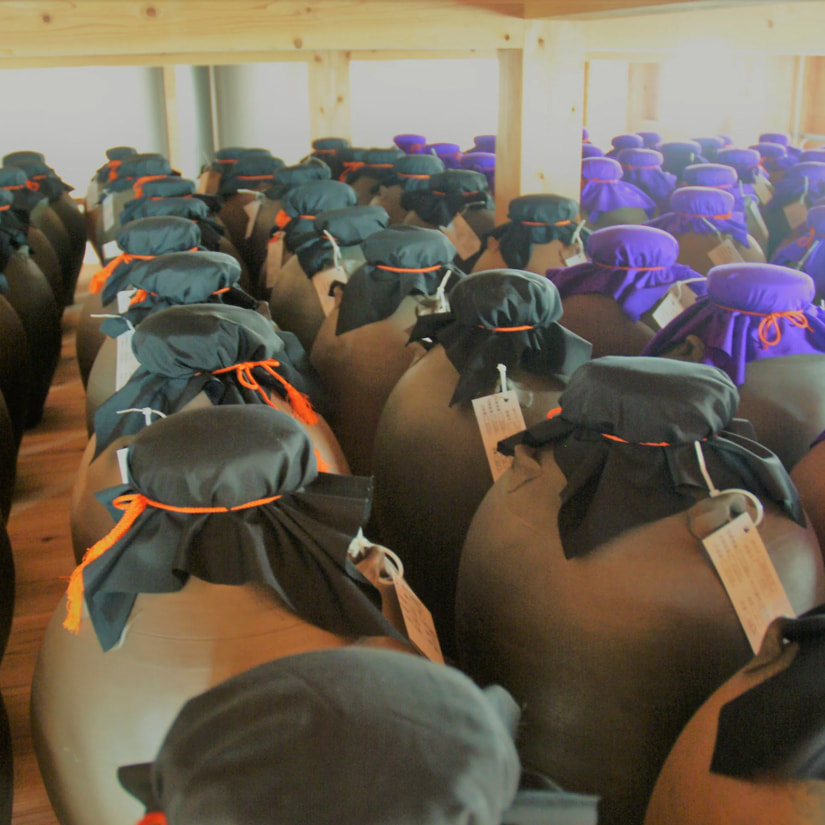
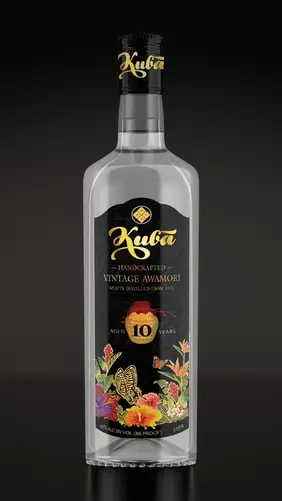
From OkinawaKuba AwamoriExperience mother nature's creation. Premium taste, texture, and aroma. Aged 10 years in an earthenware pot called a "Kame" in Nakijin Okinawa. Shipped to Honolulu and continued to age in a Kame absorbing the tropical Hawaii climate.
Matured in the traditional clay pot for ten years only for the discerning imbiber who does not compromise on quality and settles for nothing but the best! |
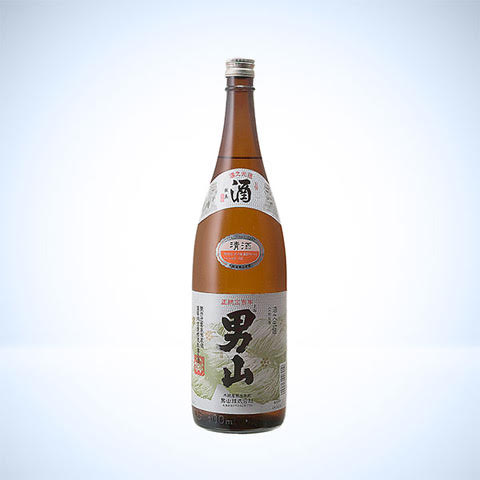
SakeNo good wine list is complete without delicious sake. We represent premium sake producers, and a full bar for your spirits lovers. From white wine to port wine to sake and spirits, we represent only the best quality products from boutique producers.
|
Our portfolio at a glanceWine, Sake & SpiritsOur list of products range from mid to high quality and price point, representing the highest expressions of wine and spirits.
|
Sign Up for the
|
|
|
LOTUS WINE & SPIRITS
521 Ala Moana Blvd, Suite M-426 Honolulu, HI 96813 [email protected] C: 1 808 348 0609 |